Design
Small is Beautiful was engaged to support Engineers Without Borders Australia's commitment to support the next generation of Aboriginal and Torres Strait Islander Engineers.
Increased representation is important as Aboriginal and Torres Strait Islander people bring their lived experiences, diverse approaches, and different ways of knowing, being and doing which are critical to creating a future that is fit for all people, protects and regenerates the planet and delivers impactful innovation. It is also critical to note the importance of (Indigenous) Nation building and associated engineering services and infrastructure being led by Aboriginal and Torres Strait Islander people.
Our process
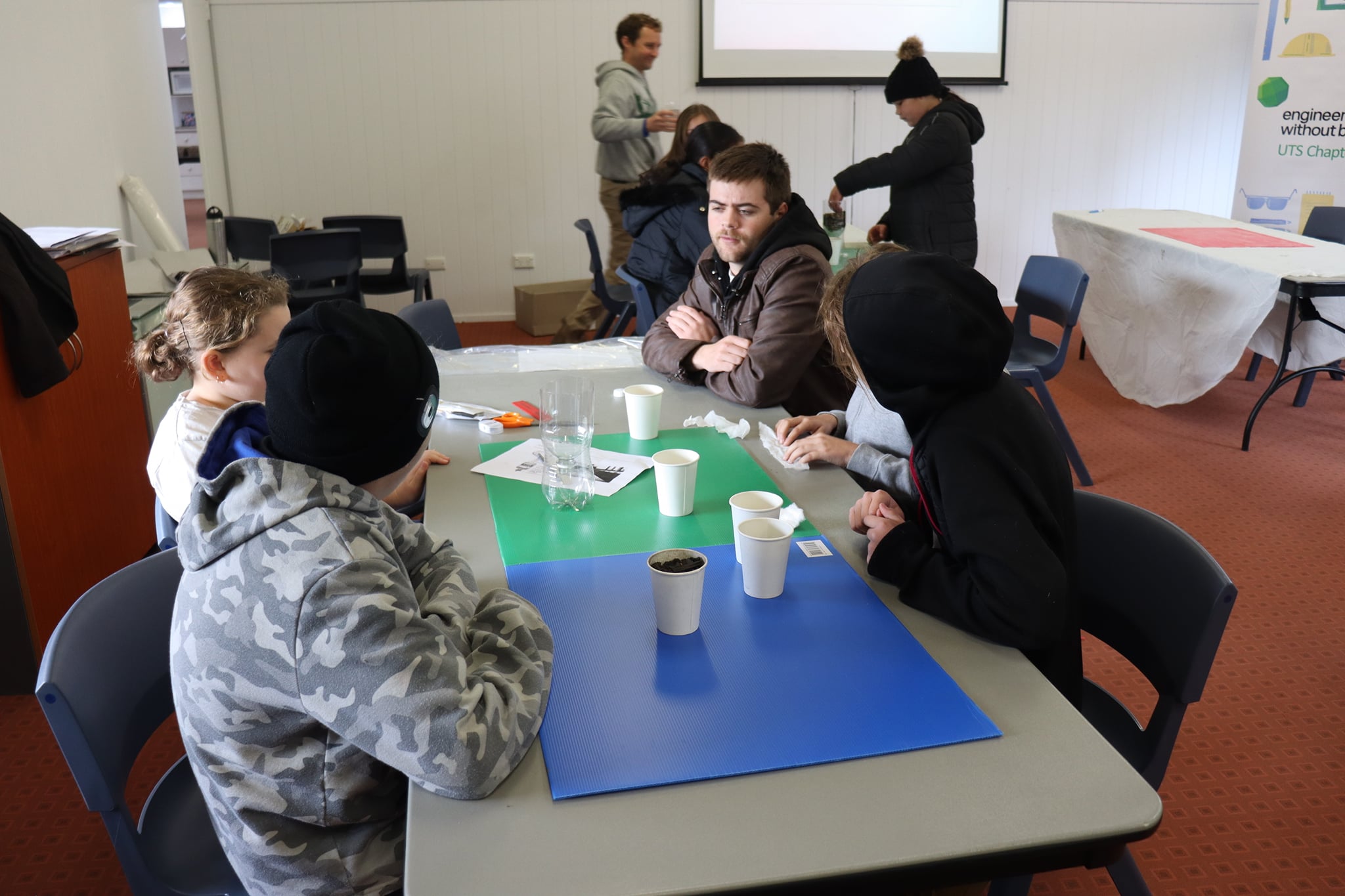
We completed a literature review, and interviews with educators and actors working, teaching, and learning in the Indigenous STEM space. We received guidance from Aboriginal and Torres Strait Islander people, in particular Engineers Australia's Indigenous Engineers Group (IEG). IEG engaged EWB as a partner based on our work, and co-design activities were held with IEG members. We also ran a pilot workshop with the Aboriginal Education Consulting Group and the young Aboriginal people they support, and drafted one pilot to be run with CSIRO's Young Indigenous Women's STEM Academy, which was postponed because of COVID.
What we found
EWB has unique experience in this space. They have partnerships with Indigenous organisations, they work across the engineering education and professional sector, and have an engaged volunteer community that run STEM outreach activities. We recommended any approaches to be led or co-designed by Aboriginal and Torres Strait Islander people. Two areas of focus for EWB were identified as:
1. A change pathway centred on Aboriginal and Torres Strait Islander engineers (actual and potential)
2. A change pathway centred on engineers and the engineering sector
The former refers to direct engagement and support for Aboriginal and Torres Strait Islander people, while the latter refers to the need for the engineering sector to decolonise engineering practices, to foster authentic professional practices that value and respect Aboriginal and Torres Strait Islander people’s ways of being and doing. This includes approaches to ensure Indigenous knowledge systems inform engineering practice. Also, to support “a [new] professional narrative is required to promote engineering as a socially-engaged and socially rewarding profession, expanding/balancing the current technical narrative” (Prpic, 2015, p. 4).
We distilled the program as needing to support the following experiences for young Aboriginal and Torres Strait Islander people:
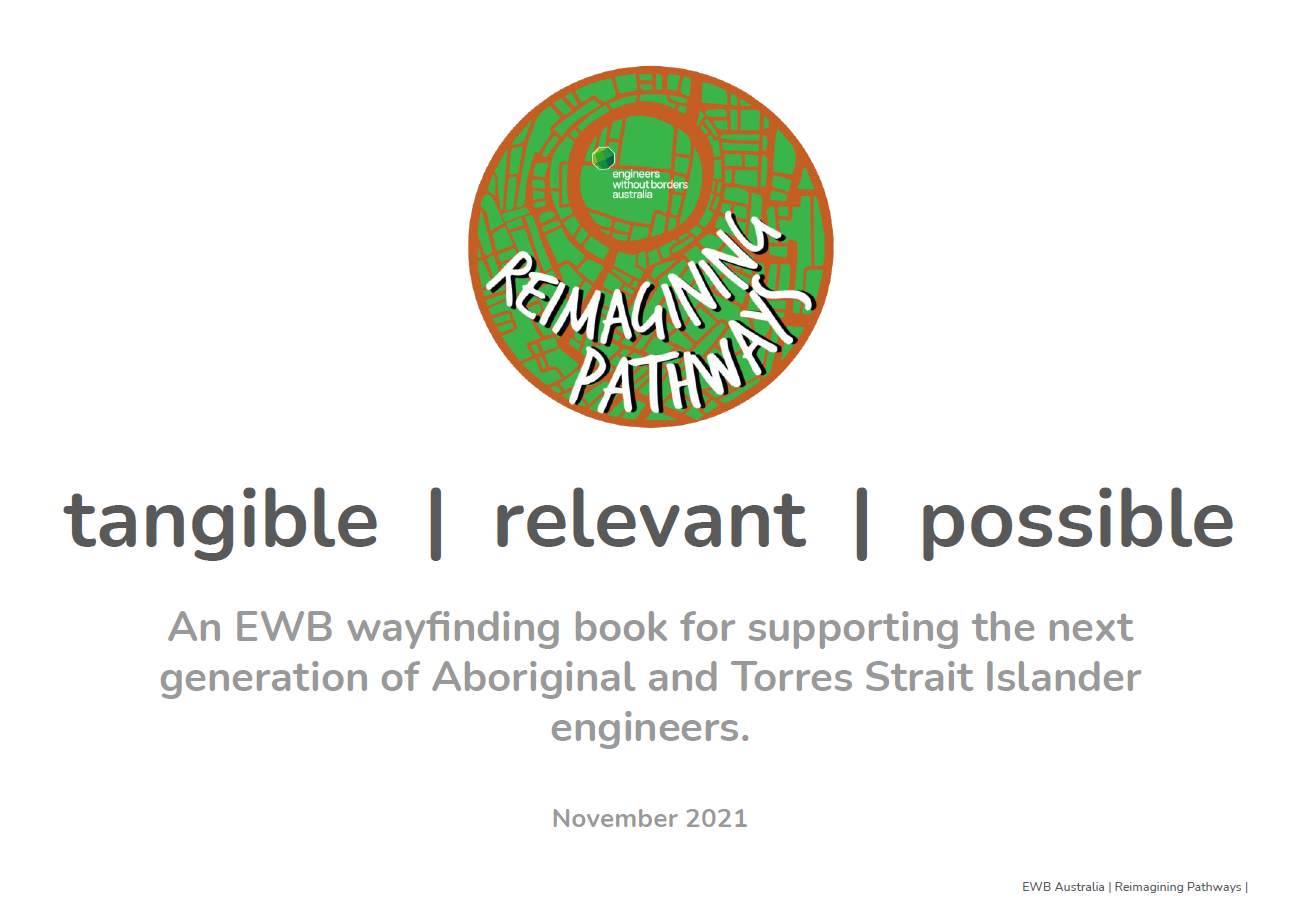
Tangible: contemporary and traditional engineering is understood.
Relevant: engineering is experienced and understood as relevant the individual, their Country, culture and community.
Possible: pathways into engineering study or vocations are known, accessible, and achievable.
What we proposed
We recommended: a partnership with the Indigenous Engineers Group (IEG) and a proposal for an Indigenous-led program designed by IEG and Indigenous Engineers and supported by EWB and other partners; an analysis of EWB’s existing Torres Strait Islander Outreach program; adaptation of EWB outreach workshops to support Indigenous-led STEM outreach programs; and developing communication materials to inspire and support pathways for young Aboriginal and Torres Strait Islander people into engineering.
The report informed a proposal for the beginnings of a new Pathways program. Two financial supporters have been engaged so far to support Pathways based on the report and proposal. Funding has supported the first Yarrawarra Forum to enact an Indigenous-led program. You can read more about the Forum here.
Image credit: Pilot workshop with the Aboriginal Education and Consulting Group, images from Facebook page and reproduced with permission, 2021